This topic aims to provide a bit more insight into how the Commercial Policy that will be reflected on the front end of our clients’ stores is chosen — especially for those with a multi-store architecture.
How is the commercial policy reflected on a store’s website chosen?
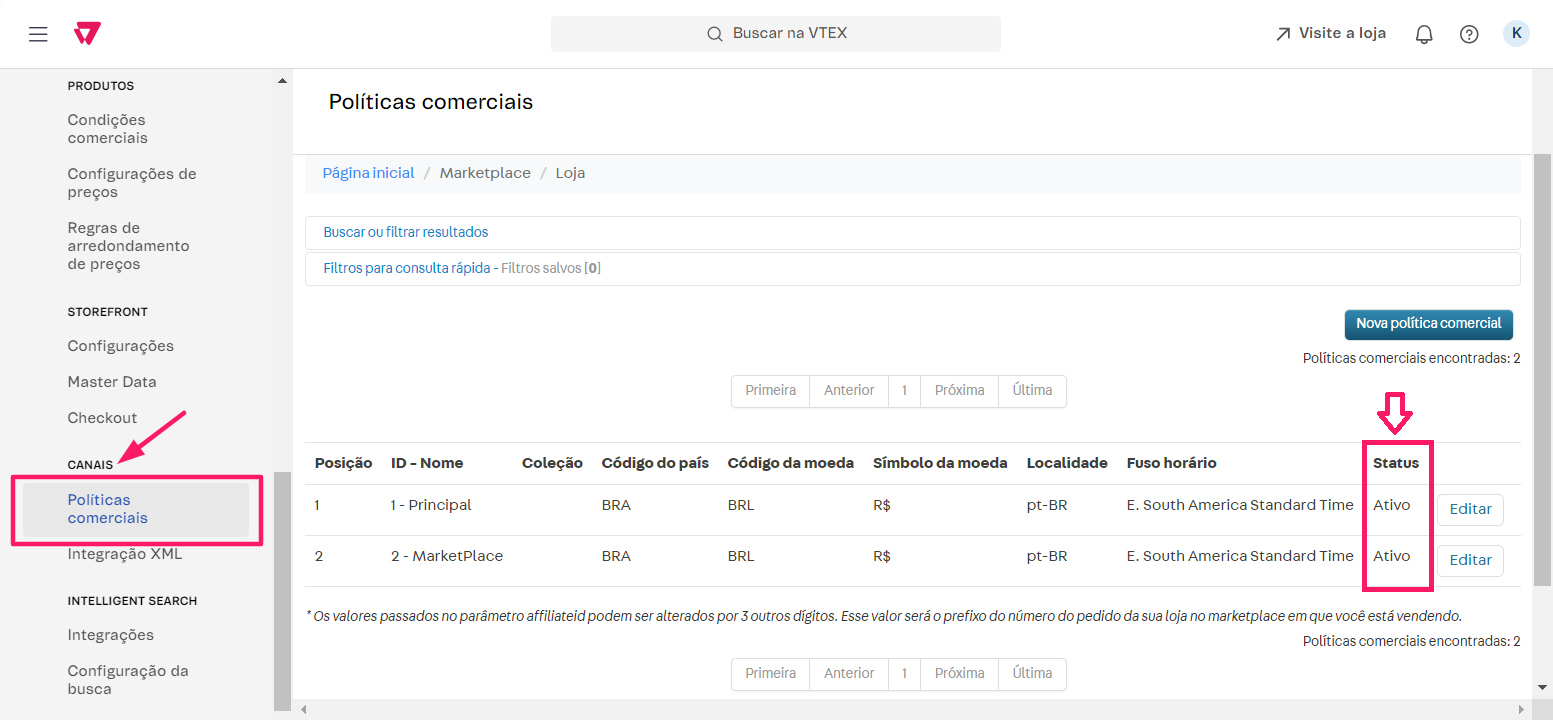
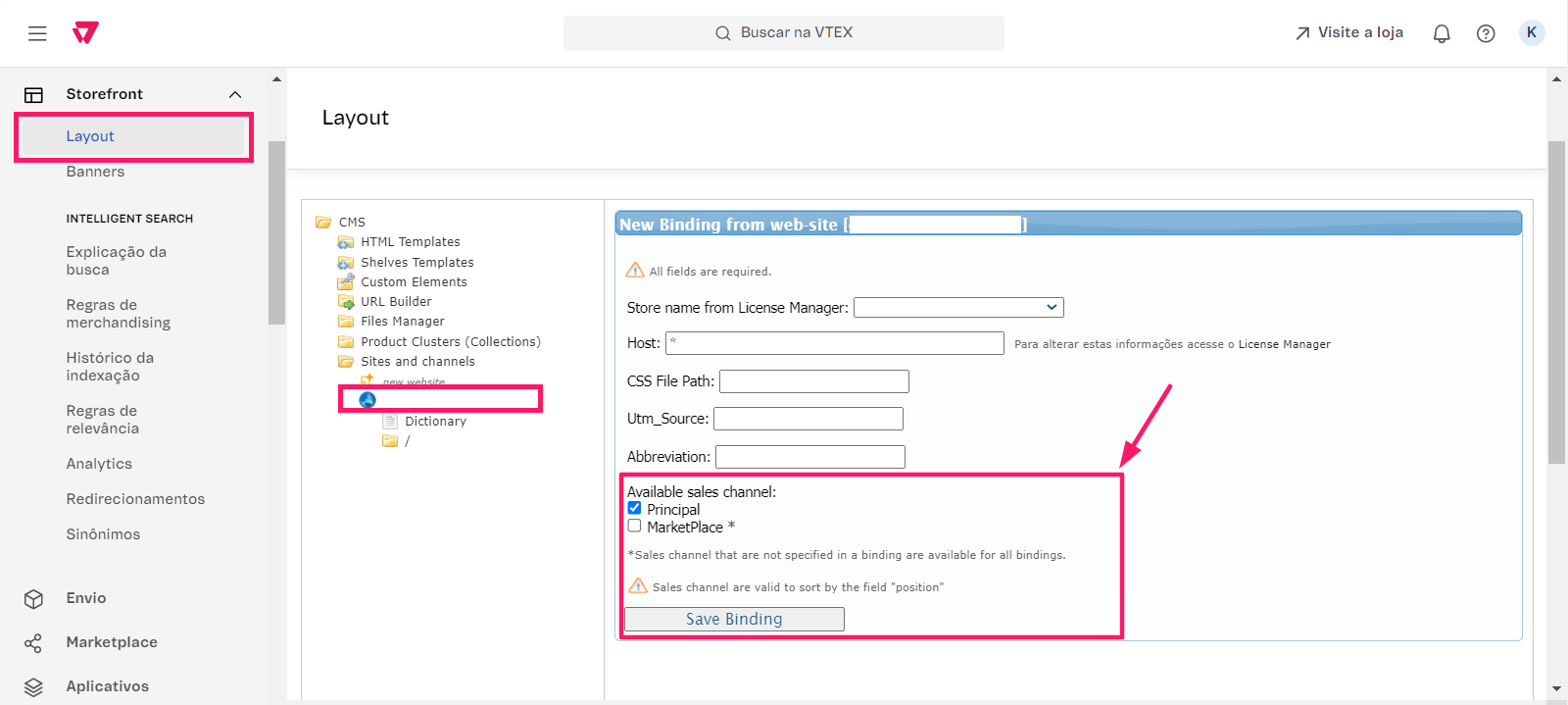
Basically, whenever a store is loaded, a scan of the list of available commercial policies is performed, following the order registered in the admin under Store Settings → Channels → Commercial Policies (Figure 1), and considering only those selected in the CMS module under Storefront → Layout (Figure 2).
Figure 1:

Figure 2:

The general rule is:
The first applicable commercial policy will be reflected in the store.
To go into more detail about what makes a commercial policy applicable:
For a Commercial Policy to be applicable, it must meet 3 requirements:
- (A) it must be active
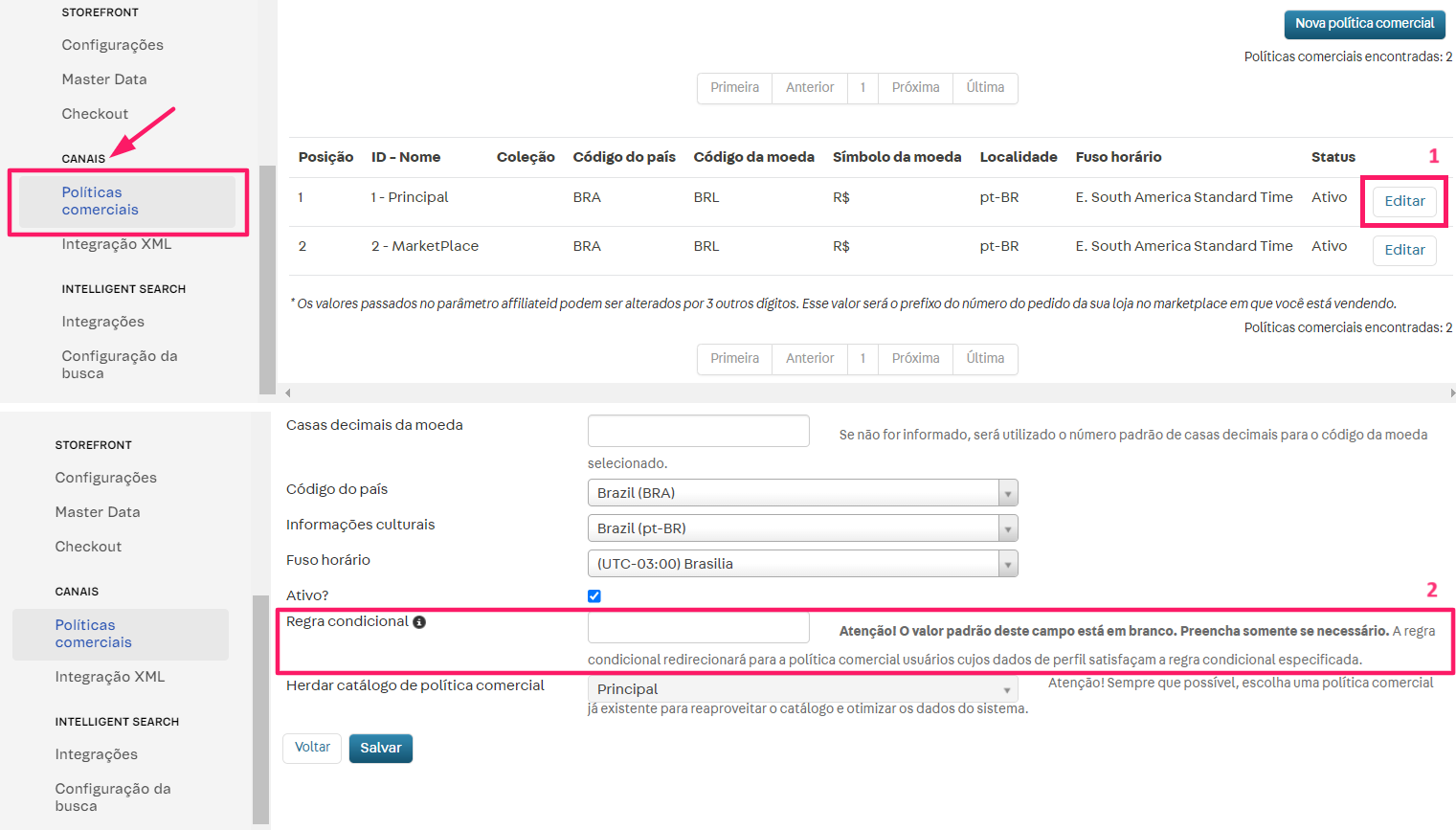
- (B) it must meet the conditional rule
- (C) it must be selected in the store’s binding OR not selected for any store
Requirement A - Must be active
Requirement B - Must meet the conditional rule
The conditional rule is a configurable field within the commercial policy, used for customer clustering — that is, restricting access to the commercial conditions available in that policy to certain users only. This is common when you want to offer different prices to employees, loyal customers, B2B clients, etc. If the field is empty, it means there are no rules for that Commercial Policy.
Requirement C - Be selected in the store’s Binding OR not selected for any store
This is the configuration we call binding. It’s done inside Storefront → Layout, using the Legacy CMS tool (Figure 2).
Binding works as follows:
The selected commercial policy is considered applicable to the store in question, and furthermore, commercial policies not associated with any store are applicable to all stores.
This second scenario is indicated by an asterisk * next to the commercial policy in the list. If there is no asterisk, it means that commercial policy is already selected in some other store.
 How policy ordering affects things
What determines the order of a commercial policy is not the policy’s ID, but its position, shown in the first column, as seen in the image below:

By default, both the position and the ID follow the order in which they were created. Once created, commercial policies can be moved to any position.
For example, a store might have the following commercial policies in creation order:
1 - Main Store2 - Marketplaces3 - VIP Customers
However, over time and depending on needs, they could be reordered to:
3 - VIP Customers1 - Main Store2 - Marketplaces
In this case, even though the IDs remain the same, the ordering changes — and that directly affects which Commercial Policy gets reflected on your store’s front end.
If you have any other questions about this, feel free to ask here or open a new topic referencing this one! 
Contribution to building this topic: @CarolPossi