For a product to be visible and available for sale in a VTEX store, it needs to meet a series of mandatory requirements, considered the minimum for an order to be placed. The goal of this topic is to share some information that can be validated and steps that can be taken to ensure your product is available as intended.
In addition to the tutorial below, we have a video equivalent available here in the Community that can be found here.
1- Product Settings
The first step for a product to be available is that it is Active and that all required fields are filled in, both at the product level and the SKU level. So the first step is to validate all product and SKU fields according to our Product Registration tutorial. Also, special attention should be given to Specifications, since a specification is often configured as required and therefore needs to be filled in for the product to be active.
It’s also important to verify that the category and brand of the product in question are active, as this is another mandatory requirement for the product/SKU to work properly.
2- Stock
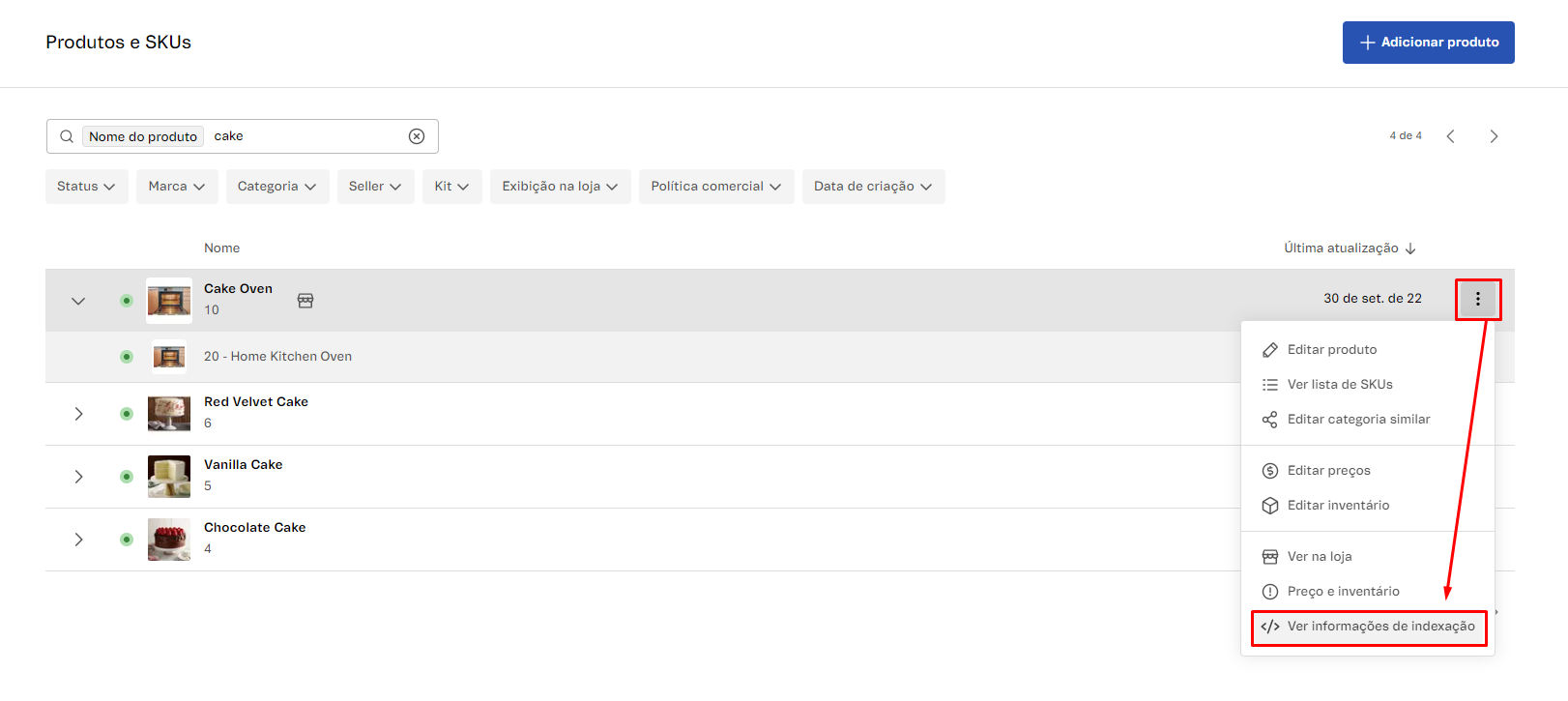
If the product in question (and its SKUs) are active and properly registered, the next step is to verify that the product has inventory set up within the logistics module. This can be done by opening the Inventory Management section in the Admin or, within the catalog itself, by checking the indexing information as shown below:
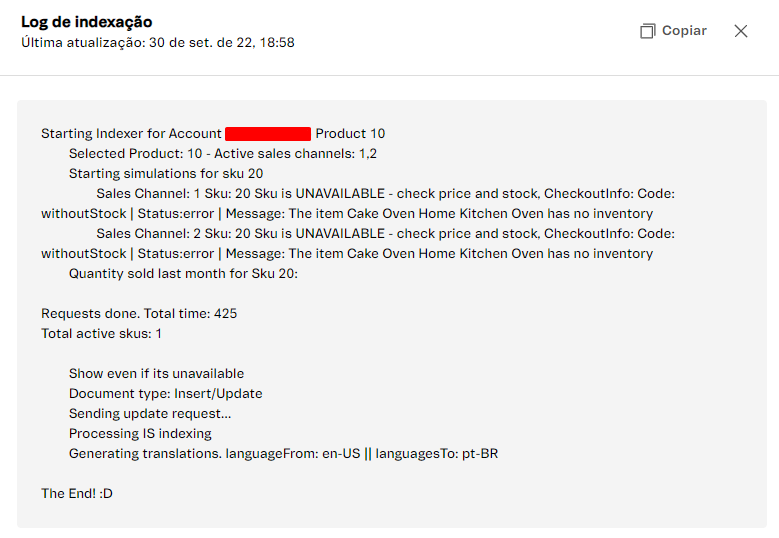
In this example, we can see the alert that the product is unavailable (UNAVAILABLE) and specifically out of stock (withoutStock):
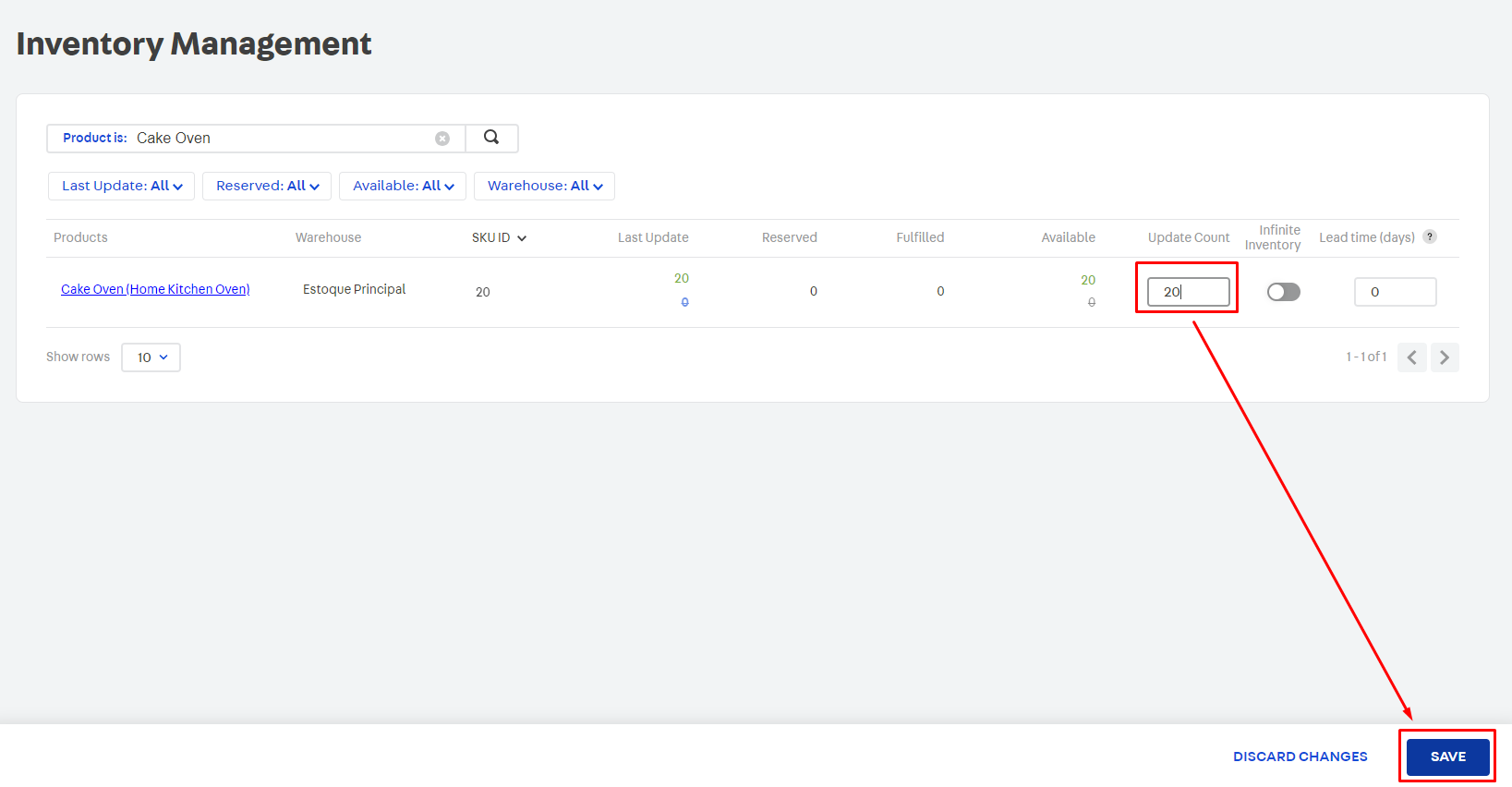
So, if we add stock to it in the Inventory section…
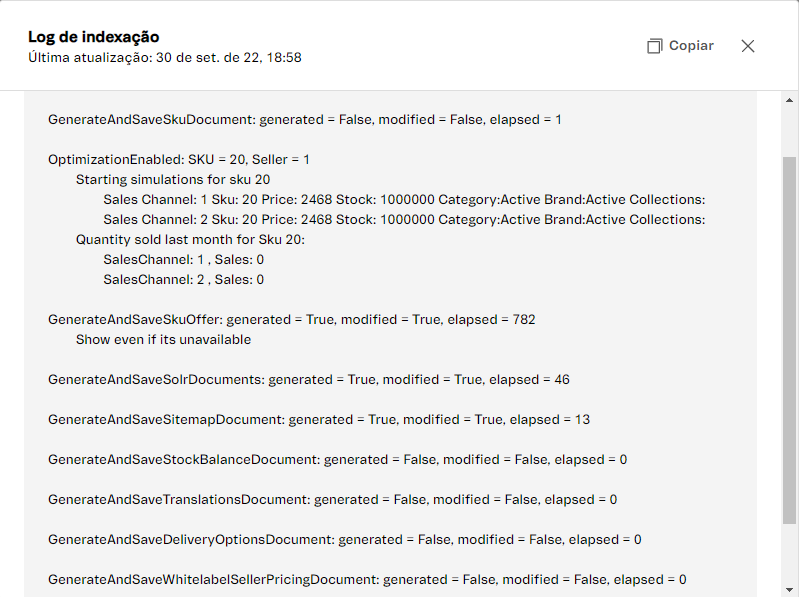
The indexing log will reflect that change:
It’s important to note that having stock alone is not enough — the product needs to be deliverable. That is, it needs to be available in a warehouse that is properly associated with a Dock and a Shipping Strategy, as described in our Logistics tutorial. To verify that a product is deliverable, we recommend using the Shipping Simulator available in the Admin.
3- Price
With the product/SKU data and stock configured, the next step is to verify that the product has a price set in the store’s Price Table, as described in our tutorial.
Additionally, for products sold by sellers, it’s important that the price is configured on the seller or that the price settings are defined in a valid way. Price settings can be found within the Store Settings section in the Admin:
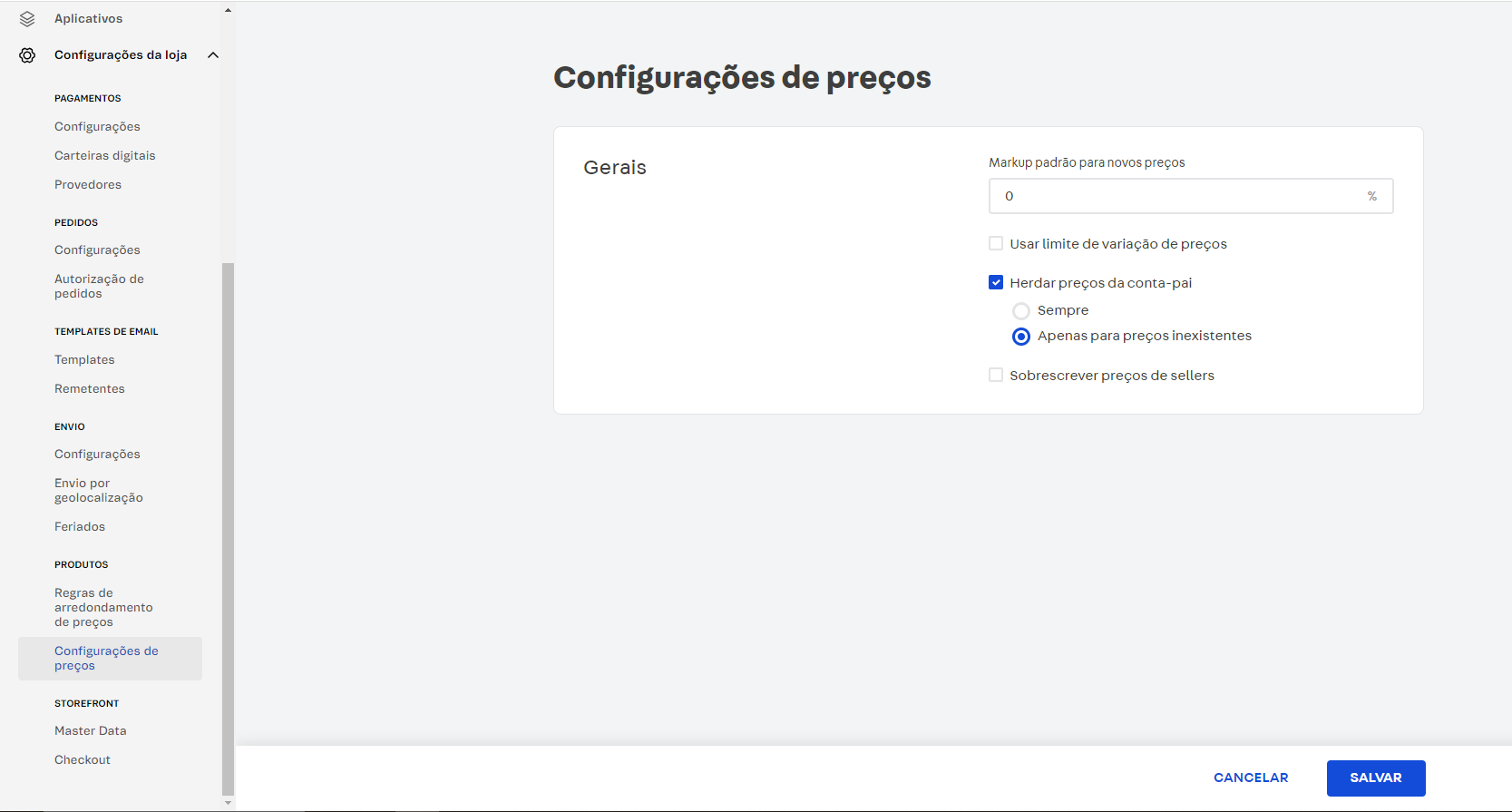
The Inherit prices from parent account setting is only available for sellers, and causes the price defined in the marketplace account to be the one displayed on the front end. Meanwhile, the Override seller prices setting has the same effect, but is configured by the marketplace itself.
4- Customizations
If, even after completing all the steps above, the product still isn’t visible, the issue may be caused by a customization that is interfering with the rendering of the product page. In this case, we can validate the product’s behavior in two ways:
- Blocking customizations (Legacy CMS Stores)
For stores using Legacy CMS, one way to work around customizations is by using Network request blocking, a feature that allows front-end elements to be blocked directly by the browser. If the product becomes visible while customizations are blocked, we recommend engaging your agency to review the product page template.
- Opening the page with a legacy interface (VTEX IO)
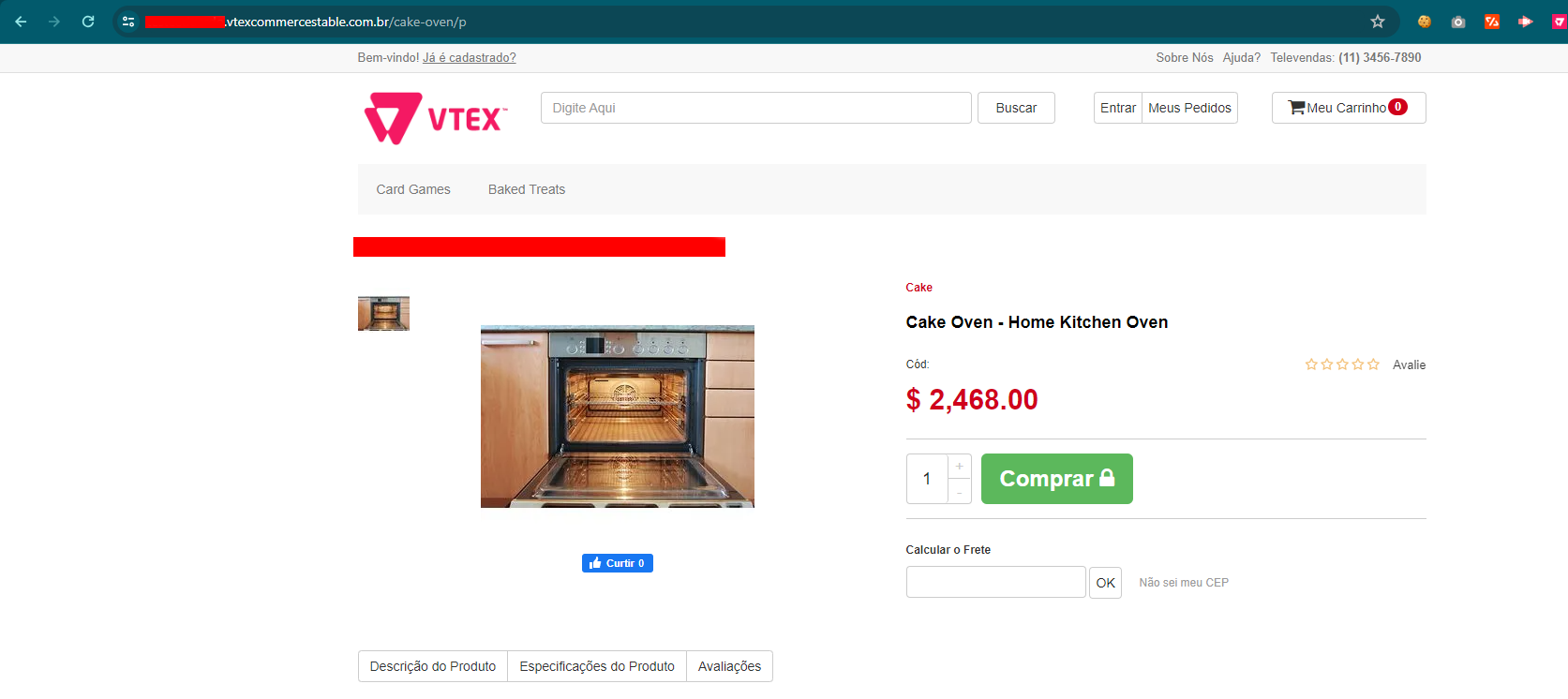
For stores using VTEX IO, it’s possible to open the product page within the Legacy CMS interface by following this URL structure: https://{{accountname}}.vtexcommercestable.com.br/{{productUrl}}/p
This will let you see the basic elements of the product page with VTEX’s default UI. If it becomes visible as shown below, the issue may be with your store’s theme, and we also recommend engaging your agency.
- Testing the product in Checkout via Cartman
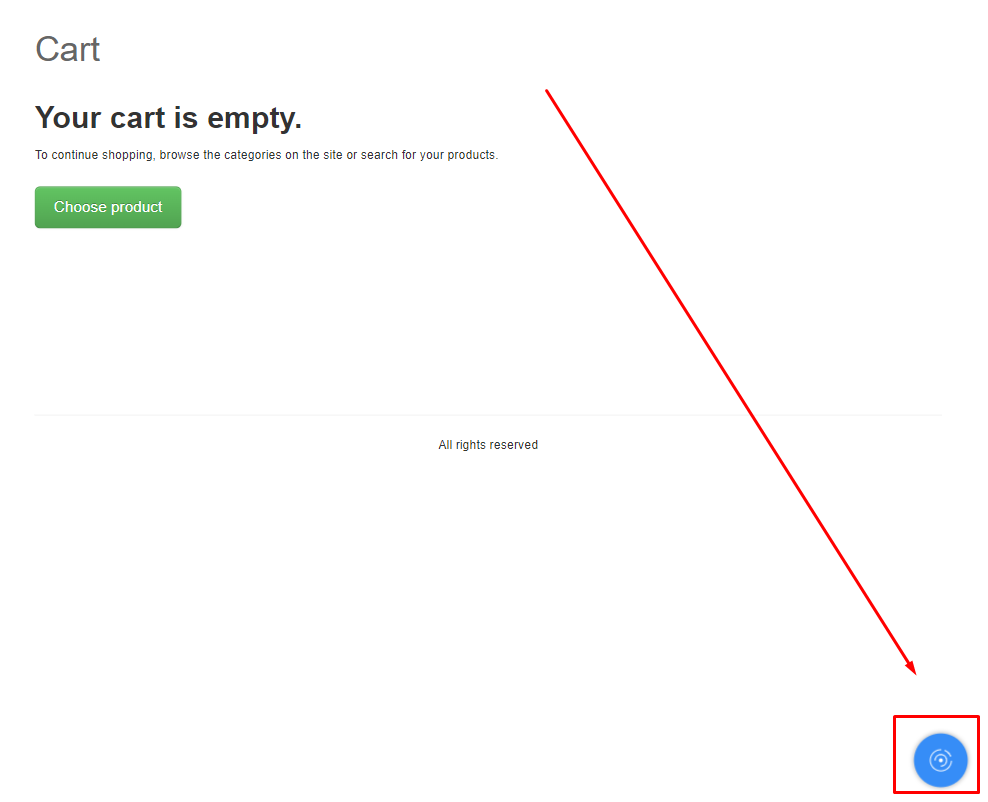
Another way to test a product’s functionality in a scenario without customizations is through the Cartman tool, available in the checkout of every VTEX store within the myvtex environment (https://{{accountname}}.myvtex.com/checkout), which can be accessed in the Checkout by clicking the blue button in the bottom right corner:
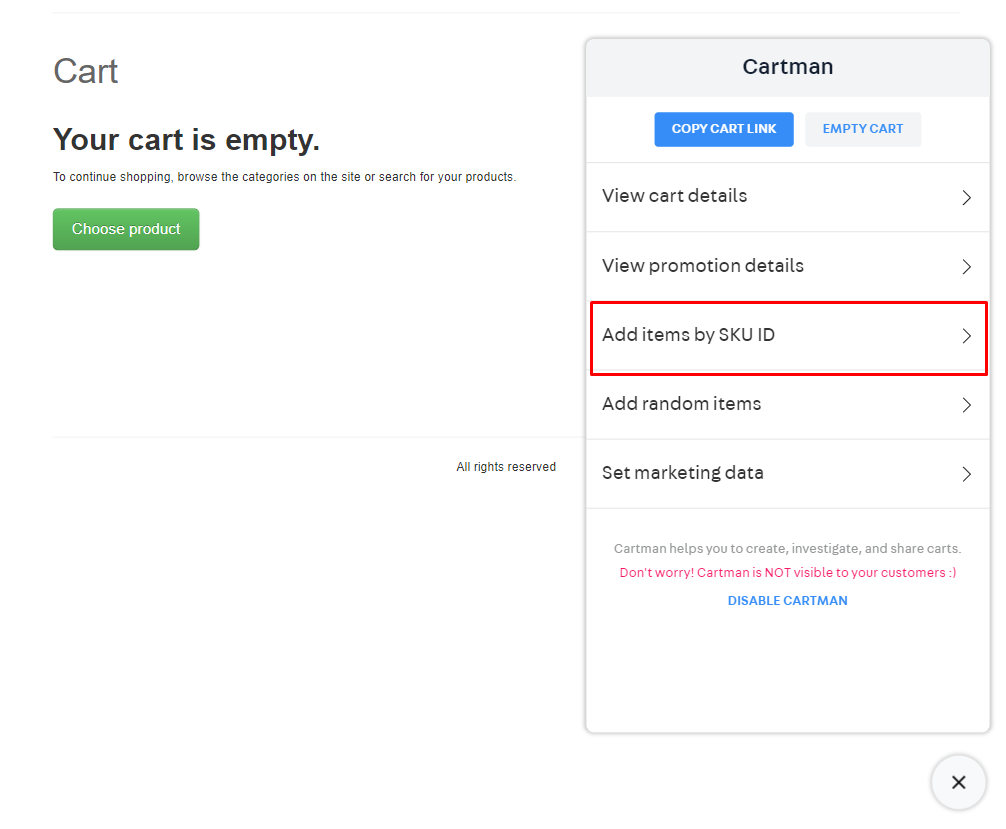
Within it, we can use the “Add SKU by ID” function to force the desired product to be added to the cart:
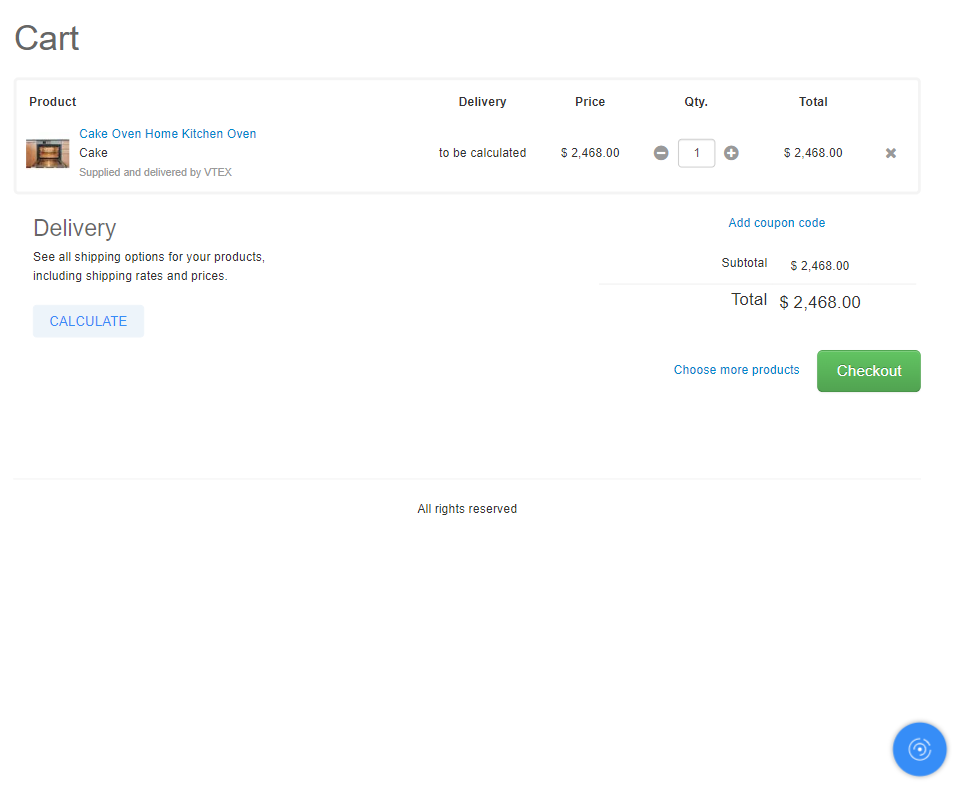
If the product is added successfully and is available for purchase, as shown below, we recommend validating the product page with your agency:
5- Cache and Indexing
If all the previous steps have been checked and the product still isn’t visible (and is unavailable when added to the cart via Cartman), one last possibility is that it is still being indexed or that the page in your browser is loading from cache.
Indexing is a normal process across various VTEX modules, in which new information is sent and saved across different modules and databases to ensure the store functions properly. Since this process involves multiple steps and queries, it’s normal for changes to take a few minutes to appear on the front end, and we therefore recommend waiting after creating and/or updating any product. See our tutorial on How indexing works here.
Cache, on the other hand, is a key tool for performance gains not only in VTEX, but across a large portion of tools, platforms, and destinations on the internet. Cache is, in short, a previous version of a page and/or data that is saved in the browser and allows a page to load faster after the first visit. However, by its very nature as a previous version, cache can cause updates to take a little longer to appear. To make sure cache isn’t affecting your browsing, we recommend the official Google tutorial on clearing cache. See our tutorial on How cache works here.
If even after all validations (and only after them) the product is still not visible, we finally recommend opening a ticket with us, so we can investigate possible issues with product creation and display.
Eduardo Luciano
Field Software Engineer | VTEX